Showing posts with label Religion. Show all posts

Sunday, June 30, 2019

Theories of Death

Death Tarot Card from The Rider-Waite Tarot deck

I was going to attempt to write something for this post some months back, but I kept procrastinating and then when I needed to have something ready to post I didn't have enough time to work on it. I also try to avoid controversy here on my own blog. The subject of death often leads to deep philosophical or religious discussions.

I was planning on using the images below from the Family Guy trading cards for the heading of the post but decided not to. They are too funny cartoony not serious philosophy.

 2006 Inkworks Family Guy: Season 2: Autographs: A8 Adam Carolla Voice of Death

Still I wanted something that wasn't too morbid. Ha good luck with that. Oooh yeah Tarot cards.

So the subject of death scares many people. In fact most people are scared of it even though it is a natural part of the cycle of life. There are those Negative Nellies that say death is the end and that is that. The old "fade to black" theory embraced by many an atheist. It is the most negative and most scary of the theories of what happens to us after we die, or what we experience at the moment of death and beyond.

I was born into a Christian family, United Methodist to be exact. I'm not sure if the church I grew up with was typical Methodist or not. Methodists tend to be sort of Baptist Lite. At an early age I was indoctrinated into the Heaven and Hell belief so it is sort of hard to shake off. As a kid at first it was you went to Heaven, unless you killed someone. To me it was never about sitting on clouds and playing a golden harp, maybe at the very first until around age 7 or 8 then it was more just about being with God and Jesus but in spirit form. Similar to our current bodies, but not physical. That is until The Rapture and Jesus' Return new bodies etc. Then in my pre-teens, teens and early 20s I backslid a bit, but still the basic Christian beliefs were there.  I looked into New Age during my 20s but didn't embrace it or take it too seriously. It seemed to be sort of a modern variant of Christianity for the versions that believed in a Christ figure anyway with a bunch of ETs added for good measure.

Over the years arguments from atheists that were not the silly "Who created God?" type questions made me question some religious things and think harder in some areas. Especially when it comes to the whole eternal Hell thing. I have never been what I consider "religious" and often just more spiritual than religious. Organized religion always bored me.

In recent years due to reading up on Near Death Experiences (NDEs) and other afterlife books I tend to lean toward some kind of reincarnation or eternal spiritual existence in peaceful settings. With God being more a spiritual force rather than an actual "person". I also read a book that studied spiritual encounters people have had that are similar to NDEs but the person having the encounter was NOT dead. Sometimes they were even wide awake. They called them After Death Communication (ADC). They usually take place anytime from when a loved one dies to a few weeks or even sometimes months or years later. That book leaned more toward Christian religion and the survival of the soul after death. After a while all the encounters started sounding alike and the Christianity forced into them.

Onward, in my opinion here, in no particular order, are the main theories of what happens to us after the moment of death:
  1. Fade To Black: Cease To Exist:
  2. Reincarnation:
  3. Heaven Or Hell:
  4. Other:
These next sections I will go into further detail about a specific theory.

Fade To Black: Cease To Exist:

I mentioned at the beginning of this post that perhaps the scariest theory of death is the one held by many atheists. It is the fade to black and cease to exist. OK so clinically and biologically when the human body shuts down; the heart stops pumping blood, the lungs stop circulating air and the electrical synapses stop transmitting signals to the brain, the human consciousness stops and shuts down as well.

When we sleep we go into a sort of shut-down mode. Our consciousness rests and we shut out the outside world. We relax, close our eyes and eventually "fall asleep". During our sleep we are unaware of the outside, our thoughts are not focused on one tiny thing like when we are awake and conscious. During this time since we are ignoring (for lack of a better word) the outside we don't see anything, our eyes are closed. We might hear things until our focused consciousness totally relaxes. It is only when we awake the next day, or a few minutes to hours later that we are aware that we had even been asleep and often only remember blackness or an emptiness. Apparently people who are blind from birth have no true concept of colors so their "blackness" is just more non-images. Some describe blindness by asking you to imagine trying to see out of your elbow, or the back of your head. Well you can't see out your elbow of even imagine how that works. It isn't "blackness" it is just no image what-so-ever. Occasionally upon awakening we remember our dreams (aka visions) from our sleep. It is said that we always "dream" but we don't always remember having them.

The fade to black death belief often says that death is like sleeping except we don't have dreams. Our vision shuts down, our hearing (which is said to be the last sense that goes) stops, and eventually brain function (thoughts) stop as well. So the idea of total shutdown equals non-existence.

For this theory the scary thing is the non-existence. After having existed, the thought of no longer existing is extremely creepy. For me much like falling from a great height. I discovered it isn't the falling that scares me it is the sudden hard impact of stopping and splattering the scares me. So I am no longer afraid of falling just the sudden stop at the end. I am also no longer totally scared of death, it is the actual transitioning from life to death that scares me, and the pain that is felt during that transition.

Reincarnation:

Many of the older Eastern religions have some kind of reincarnation belief. That is that we are spiritual beings that travel from life time to life time. The concept that we have an eternal spirit or soul that is separate from our physical body, but is also a major part of who and what we are. The Judeo-Christian religions also have an eternal spirit/soul belief, but not the reincarnation bit. Most religions or belief systems that do believe in the soul-spirit believe that the ultimate goal is to reunite with the main source or god and that during our lifetime we are trying to raise our awareness to a higher level or frequency to reach that highest frequency the creator source. Each lifetime is expected to get us that much closer to our eternal goal.

Some reincarnation beliefs state that our spirit can inhabit any physical body be it plant, animal, or human. What we do during our physical lifetime determines what type of body we will inhabit in our next life. You live a nice decent life you return as a human, you do some bad things you return as some kind of animal for a few lives. Conversely there are reincarnation beliefs that state we only inhabit (I prefer the word embody) human bodies, not animals or plants, or rocks even.

Reincarnation beliefs often include some kind of Karma system. Again it is what you do in your life time determines your future life or lives. If you tend to do good decent things you will have good karma and your next life will be fruitful and rewarding. On the other hand if you are a heartless scum of the Earth you will have hard dark black bad karma and you will suffer greatly in your next life.

Many modern NDEs indicate there is a reincarnation system of some kind in place. One that includes a sort of paradise or a world, or rather existence where whatever we desire or wish for will appear or come to us. Again there is the idea of some kind of desire to connect with the creation source and though our various lives we get closer and closer to that source.

Heaven Or Hell:

Several of the religions that believe in an afterlife or continued existence after physical death believe that based on what one does in one's life determines one's eternal destination. It is a one or the other belief. Either you live in eternal peace with the creator, or you suffer eternal torment in Hell. There is no in-between and once you arrive at your destination there is no going back no switching to the other place.

So the concept of Heaven is eternal Peace. Often in the company of the eternal father the creator god.  This destination is for those who lived the perfect good life according to the tenets of faith and what the holy god says. Hollywood has incorrectly implanted a vision of sitting on clouds in long white robes and sandals with wings on our backs and playing handheld harps. Oh and a golden ringed halo magically held above our heads. About the only thing of that vision that many of the religions do believe is wearing the comfy white robes with the sandals.

Depending on the religion what paradise is will be whatever one desires.  You "think" it and it is or appears. Everyone you have ever cared about or for is with you or can be with you. Provided they had the same faith and also lived a super perfect life according to what the creator god demands of his followers.

Hell on the other hand is very dark very hot and smells of burning and rotting flesh. This is reserved for evil people and those who did nothing but bad things in their life (some even believe those who only thought about sex will be there as well). Some even believe if you didn't believe in god or the right god Hell is your eternal home. Mean Ugly monsters and demons poke, skewer, cut, burn, eat, smash, crush and do all other sorts of mean and nasty things to the people in eternal damnation.

Once a tortured soul has been burned, mutilated, pulverized or whatever they magically "heal" only to be burned, mutilated and pulverized all over again, and again, and again, and again.

The concept of an "eternal" hell to me doesn't make much sense if there is a truly "loving" god. Being punished for all eternity for a very finite thought or action. That is like being sentenced to prison for 1 Million years for stealing a candy bar as a nine year old. Punishment overkill.

Other:

I don't know how many other theories there actually are. There might be several that don't fit into what I have mentioned above. Some people separate Heaven and Hell into two separate theories since they are two different destinations and there are some that believe one way or the other not both. Plus some divide the various Reincarnation theories into 2 or 3 separate ones but I kept them together since the basic core belief was the same. In this "Other" category I have heard about this Simulation theory I give below.

Computer Simulation AKA: The Matrix: 

One of the more bizarre and fairly recent death theories is that we are actually living in a computer simulation and that what we think of and call "reality" is actually a computerized matrix. I just think this one is really hokey and tend to dismiss it as a pure fantasy. I have only heard about it being a theory I can't imagine what sort of details have been thought up about it. OK so where exactly is this computer that is creating the matrix and has our code data? Who made the computer and programmed it? Are they still monitoring their program? Why even bother making it in the first place? So are we just memory data in the computer and when we "die" our data is lost or used up? Do we "wake up" in whatever is outside this computer that runs this matrix? I still don't fully understand this particular theory.

Monday, November 26, 2018

World Peace: Some Thoughts And Ideas


For many years I have had an idea for a world peace plan. Unfortunately due to mankind's violent nature this world may never have true worldwide "peace". The plan is very simple in concept but the actual execution of it is the part that would probably never be possible to accomplish.

In a nutshell the idea is for all of the countries in the world (195?) to hold a peace conference, select a group of globetrotting ambassadors that would travel the world and meet with each and every country's political and religious leaders over a year or two year period. After the traveling ambassadors complete their trip a second peace conference would be held discussing the information the ambassadors obtained on their travels and to formulate some kind of plan to get it done.

Unfortunately with the thousands of religions in the world and some of those in direct conflict with each other on many issues there is no clear cut solution.

There is also a small faction of isolated tribes that don't want to have anything to do with the outside world. These isolated tribes in the short term would be a non-factor I guess. These primitive tribes are usually very hostile to outsiders. In many cases those unfortunate enough to encounter these tribes end up dead. In recent weeks (about a week before Thanksgiving?) a young American Missionary was killed in his attempt to "Introduce The Lord" to the Sentinelese from the isolated island North Sentinel in the Bay of Bengal off of India. The Indian government has strict laws against any contact with the tribe. These laws are intended to not only leave the tribe alone to keep their culture intact, but also to protect them from modern diseases which could kill them and to protect outsiders from the tribe. This young man ignored those laws and warnings he was given.

Would total world peace require a worldwide government, or could just a central "mother" government that oversaw the group of individual countries work? Many think it would require the full one world order/government yet several religions primarily Christianity are dead set against an overall one world government. There are also conspiracy theories about secret societies like the Illuminati planning on creating an evil One World Dictated Government by force.

THE PLAN or IDEA:
OK so here are more details on the idea. All the countries in the world would agree to hold a peace summit. Every country would participate, no exceptions. Each country sends a small delegation of 2 or 3 people to this summit, conference. The delegates do not have to be government leaders or high ranking officials. From this assembled group of delegates a small group of special ambassadors will be assembled. My original thought was to have a symbolic 12 people. The number could be as few as 5 or 6. There will also be a small group of alternates designated to fill in for the main group should there be some sort of need to do that.

This group of 12 will have the task of visiting with the political and religious leaders of each and every country within a one or two year period. Spending a few days to maybe a week in their world peace discussions. The number of special ambassadors might have to be increased and they might have to be split into smaller teams to meet the suggested 2 year time limit. I don't know how long visiting each and every country will actually take. They will discuss with the leaders (and their translators) what world peace means to those people and what they think it would take for that to be achieved.

While the special ambassadors are traveling from country to country their health and safety will be insured. If any individual country or group of countries attempt to kill or kidnap the special ambassadors, they would be met with worldwide sanctions against them. Trade with that country would cease immediately. Diplomatic relations with those countries ended. That country would be socially isolated from the rest of the world. If they then declare war on any individual country they will be met with the military force of the entire world against them.

OK so maybe a delegation of traveling ambassadors might not be needed, maybe a huge peace summit over a month or two might do the same sort of thing. The main idea is to have every country's input as well as the input from every religion. I thought that a small group meeting with the leaders would be more effective at actually getting the talks done and insuring the input from each and every nation and religion than one massive meeting. A huge summit would could also have too many potential arguments that would delay discussions.

The cooperation of every country would be needed for this idea or a similar idea to even be attempted or have a chance at being successful. As I said a big problem is religious beliefs. Some religions would have to reconsider their "traditions" as they relate to how they treat others and if they even give them the courtesy of respect or of recognition of being an equal human being.

Maybe just an overwhelming majority of countries would be needed for this to happen, and then hopefully the reluctant countries would eventually join in.

These a just my ideas on how world peace could be achieved. Maybe this sort of idea could work, but it probably wouldn't. Just as I said near the beginning of this post total world peace might never be possible on this world.

I welcome comments on this idea, but any hate filled comments or nonsense comments that just say it is a stupid idea will be deleted.

*World Peace Button Image from https://www.zazzle.com

Monday, January 23, 2012

Book Update: December 2011 Books

DECEMBER 2011 BOOKS
I got a bunch of books back in December pretty much all of them were through Ebay. I even got two editions of the same book (originally for the different covers). I noticed after I received the second one that in addition to the title being switched a bit there was a chapter that had been updated/changed with the second edition. So cool and all that for double dipping that one.

As I mentioned last month (Book Update: November Books) this book Doctor Who: The Stone Rose by Jacqueline Rayner was on order and due to arrive in December which it did. I also mentioned that it is for the Sci-Fi Adventure Book Club I belong to at Goodreads. We start reading then discussing this book in March (September is another Doctor Who book).

For who knows how many years World Distributors LTD has been cranking out hardcover annuals for Doctor Who. In the UK the tradition of Annuals for TV shows is very popular, even when shows end up getting cancelled after only one year (and thus one annual).

Lookie another Doctor Who Annual from World Distributors LTD. This one I noticed is highlighted as an example of the different editions WD LTD publishes. They produce a local UK edition that gets branded with the year on the front cover and spine and also on the title page inside, plus a unit price is put in the corner on the title page. They also make an international version that doesn't have the unit price on the cover page and doesn't have the year printed on the outside cover. I noticed I have the international version.

Just a Pun little book published in 1962 edited by Robert Margolin. The Peter Pauper Press also printed another little Pun book I think with the title "The Liitle Pun Book" with a red cover I'm certain that my family had a copy of I think we also had a copy of this pun book as well, but I'm not 100% sure.

This is the autobiography of Pat Benatar. As a Benatar fan I had to get this. Somewhere I've got the only other two books on Pat Benatar that had been published. I'm not sure exactly where those are right now.

NCIS Series by Mel Odom
These next three books are part of a series of books that follow a team of NCIS agents. The series is not associated with the TV show in anyway. I do think that the show inspired the author Mel Odom to write these books. Odom apparently has military background and according to his bio on the back cover he has a background in forensic science. The books are published by Tyndale House Publisher's Inc. which specializes in Christian Fiction.

Paid In Blood (NCIS Series #1)
In this first NCIS book by Mel Odom we meet a team of NCIS agents who are based out of Camp Lejeune, North Carolina. Most of the characters had military careers before transferring to NCIS. The team leader Will Coburn has to balance family problems with his workload. The team has to track down terrorists who are into smuggling not only drugs but nuclear weapons. This book does tend to get a bit preachy, more so than the second book in the series does so far (I'm about 40% though reading the second book at the time of posting this). I enjoyed this book even though it had nothing to do with the NCIS TV show. The only thing I didn't like about it seems to be a common complaint of it being a bit too preachy.

Blood Evidence (NCIS Series #2)
So far this second NCIS book is just as good as the first and it isn't as preachy as the first one was, but does have a little bit of the characters thanking God and praying for stuff. This time the team is involved in the reopening of a case of a murdered 16 year old girl whose mother is a Naval Officer and stepfather is now a big political figure on the rise. At the time of this posting I haven't finished reading this one yet.

Blood Lines (NCIS Series #3)
The third book in the NCIS series. I don't know much about the plot to this one yet I'll find out soon enough when I start reading it.

City Of The Dead (Seven Wonders Novel 2)
This is the second book in the Seven Wonders Series of books by T.L. Higley. This one takes place in ancient Egypt and centers around the main architect for the Great Pyramid of Giza. It is a first person narration which at first annoyed me some but I got used to it as I read through it. Even though I had heard this book is Christian Fiction it doesn't seem like it. The closest it seemed to get is when they talk about a group of people that are of the one and talk about one god. To me that didn't seem preachy but it could be considered a veil to Christianity, except that the time this story takes place these people would most likely be Jews.

This is one of those "old" books by Scholastic Books Published in 1977 this book tells some of the behind the scenes of the television series of The Hardy Boys and the Nancy Drew Spin-Off Series.

This is the same book as the book above except that the chapter on the actress playing Nancy Drew has been updated changed. It also has a different cover. It also was printed in 1977.

This book by John Baxter is simply one man's journey of book collecting. I am currently only a little less than 20% though reading this book. It tends to get a bit slow, especially when he goes on a tangent about a certain author or a book seller or collector.

The Hardy Boys Detective Handbook
This is one I had as a kid and I'm pretty sure I read it at that time. It was one of the "hand-me-down" books from my brother(s). I recall they had 20some Hardy Boy books and when I started getting into them I added about 10 more or so to the collection. I think the originals from the collection went with my brother and his wife ages ago. I decided recently to try to rebuild a collection of them. More Hardy Boys fun for January. Anyway this book is more sort of a reference type book that tells how some aspects of police business is handled or was handled back in the late 50s early 60s. There have been a few updates over the years I think I also had the 1974 edition of this book at one time.

Friday, April 01, 2011

A Recent Read Number 17


"Again Langdon forced himself to consider the implausible. If the Illuminati were still alive, and if they stole the anti-matter, what would be their intention? What would be their target?"


NOTE: This review may contain SPOILERS.

Angels & Demons by Dan Brown.
I'm getting to this review very late. I read this book around December '09 to January '10. After reading it I re-watched the movie adaption of The Da Vinci Code and watched the movie of this book (I will probably point out the differences as I go along). Chronologically this book was written before The Da Vinci Code but the movies were released in reverse order and the Da Vinci Code movie claims that adventure as the main character Robert Langdon's first mystery case. That forced the producers of the movie to act as if this adventure came later.

The mystery begins with the murder of a physicist working with anti-matter experiments at the CERN (Conseil Europeen pour la Recherche Nucleaire AKA: European Organization for Nuclear Research) in Switzerland home of the Large Hadron Collider (LHC). Left by the body is an ambigram (an artistic depiction of a word to make it read the same way from another angle usually upside down) depicting the word Illuminati. The main character Robert Langdon is brought in because he is an expert in symbology. An odd and grisly fact about the murder is one of the scientists eyes was removed. The reason is soon discovered a container holding a piece of anti-matter was stolen from a lab that had a sophisticated retina reading security system. The big problem is the anti-matter has to be contained in a certain way, without this containment it becomes a bomb with a set time to explode, unless it is returned to it's containment system. Only two people had access from the secure lab the murdered scientist and his partner/daughter. Of course Langdon falls in love with Vittoria Vetra.The movie version changes the murder victim to being an assistant of Vittoria The movie also changed some of the other character's personalities around, making one of the characters I didn't like in the book likable in the movie.

The main goal of this adventure is to get back the anti-matter before is explodes In the meantime the Pope has recently passed away and the Vatican is in the process of electing a new Pope. One big problem the main candidates for the Papacy turn up missing. It is made known that the Illuminati are indeed alive and are responsible for the disappearance of the main candidates. Soon they start showing up dead. Langdon now has to not only race against the clock to keep the bomb from exploding but he has to help find the missing cardinals before all of them end up dead.

Like The Da Vinci Code this book digs deep into Catholic traditions and culture. It also gives some very vivid descriptions of areas of Rome and the Vatican. As part of his investigation Langdon has to gain access to the Vatican's Library vaults to research the Illuminati and follow all the clues to finding the cardinals in time. As with the other book it has a nice fast pace to it and was difficult to put down. 

As I said I read this book before seeing the film version I am glad I did because it helped to understand somethings about the movie, but as I said they did make changes to some things. It is always interesting to see a film adaptation of a book you have read. There were a few scenes in the movie that were completely different from what I had envisioned while reading the book. I think a few of them could have been done the way I imagined, but one or two of them couldn't. The ones that I thought could have been done I was a little disappointed with how the movie handled them. Oh Well.

My review of The Da Vinci Code.

Angels & Demons by Dan Brown 2000 (2006) Pocket Books 710 pages. - ****

Thursday, November 19, 2009

A Recent Read Number 15

"I desperately wanted to talk to a human being, but knew I would never get the chance. You are kept from any form of fellowship, conversation or human interaction. "


NOTE: This review is written about 5 months after I finished reading the book. This is the last of my back-logged book reviews for now. This review CONTAINS SPOILERS.

23 Minutes In Hell - By Bill Wiese. Before I begin this review, this is another near-death experience book written by a Christian author that skeptics will pass off as an oxygen deprived fantasy. There have been a few reviews and website postings that point out some inconsistencies in the telling and then go on to crack jokes about the book and it's author.

In a nutshell the author a Christian preacher came home one night, went to bed and then had an awful experience. He was in his bed and then at "3:00 AM" he was suddenly falling and finds himself landing in a dark prison cell. The cell walls are solid stone, he then becomes aware of nasty evil creatures that then proceed to torture him physically. At some point he manages to escape from them and "explore" other areas of the dark world he has found himself in.

He describes pits of fire, with people burning in them screaming and trying to escape only to fall down or be pushed back be other nasty looking creatures. His descriptions are in line with everything about "Hell" that is in the Bible in fact later chapters go on Ad nauseum about where the Bible mentions hell, the exact wording and how many times it appears.

The first couple of chapters tell of the author's Hellish adventure, which is similar to other books I've read one being My Decent Into Death: A Second Chance At Life by Howard Storm. The descriptions of Hell are pretty much the same, how they got there is where they differ.

I'm not sure what to think about this book, as I had originally heard nothing but the nay-saying skeptical "reviews" of the book. I tend to question the authors knowledge of the timing. How did he know was "3:00 AM" when he first "fell" into Hell? Was he looking at the clock at that exact minute? He was supposedly sleeping before he found himself in Hell. I can understand his knowing it was 3:23 AM when he came back as people usually check the time when they get back home after being someplace else. Seeing the time when you come back gives some sense of comfort.

I will leave it up to people who read the book what to think about it, and wither or not they believe the author really experienced what he has written about. As I said at the beginning skeptics will take this story with a grain of salt and call it a fantasy. Christians may get scared of some of the things in it and try to increase their faith in God and in Jesus.

23 Minutes In Hell by Bill Wiese 2006 Charisma House (A Strang Company) 170 pages - **

Wednesday, November 18, 2009

A Recent Read Number 14

"He's Alive! The dead man started singing with me."


NOTE: The review for this book is being written about 6 months after I had finished reading this book. It does CONTAIN SPOILERS.

90 Minutes In Heaven by Don Piper. This is an interesting "autobiography" about a man who had an out-of-body experience. Skeptics will say that what he experienced was a typical chemical induced mind created fantasy. The author and many Christians believe that he actually experienced the after-life in Heaven.

On the cold rainy evening of January 18, 1989 Don Piper an ordained minsiter was returning home from a Baptist Church conference. He didn't make it home. He was in an accident on a small bridge with a very large truck. When the paramedics arrived on the scene, they found no pulse on his mangled body, he was pronounced dead at the scene.

A fellow Baptist preacher came upon the scene. He was told by God to pray for this man, even though he was told, and knew that he was dead. It turns out that he knew the man he was praying for, although he didn't know it at the time as the body was covered with a tarp and he didn't lift up the tarp. He was there to pray for this man, even though the emergency workers at the scene told him the man was dead and nothing could be done.

State law said that he had to be officially pronounced dead before the body could be removed from the scene. While they were waiting for someone who could make that official pronouncement a preacher was praying over the body. He only knew that he had to pray for the dead man and to pray that there were no internal injuries. He then began to sing. He sang a hymn called "What A Friend We Have In Jesus", the man who "was dead" then sang along. The preacher alerted the emergency workers on the scene. The authors very long road to recovery then began. He would never be completely back to normal but he has gone a long way.

The first three or four chapters describe the accident and the authors experience of Heaven in great detail. The other chapters then describe his pain, and the progress of getting back to his life. As he tells of his recovery he also tells of the tests of his faith in God and his desire to return to the Heaven that he caught a glimpse of.

Skeptics of these types of experiences will say that he didn't see or experience Heaven. It was all just chemical reactions. Christians may believe this fascinating story of one man's trip to Heaven and the Hell of pain he has endured to tell others his tale.

Unlike typical near-death experiences the author didn't travel down a dark tunnel to a light. From the moment of the accident, he was enveloped by an intense light and then was in Heaven. His vision of heaven was being surrounded by immense love and people he had loved in his life who had gone on before him. Family, friends they were all there and they were all happy. Music was all around being sung and also being experienced. The only thing missing is an image of Jesus and angels floating on clouds playing golden harps.

I am not going to try to determine if what the author experienced was real or not. I'm not going to say it was all just a well meaning fantasy. I think that each person that reads the book needs to decide that for themselves. I feel that for books like this one Christians will probably have their faith in God reinforced, and skeptics if they choose to read it will pass it off as a fantasy produced by an oxygen deprived hallucination.

90 Minutes In Heaven by Don Piper 2004 Revell (Baker Publishing Group) 207 pages - ***

Sunday, November 08, 2009

A Recent Read Number 12

"Herein you will find truth and fantasy. Each is necessary for the other to exist, but each must be recognized for what it is."


Note: This is the second of five of my recent book reviews of books I read earlier this year, and never got around to writing up my reviews. So I may have missed some details that at the time of reading these books I may have had.

The Satanic Bible - By Anton Szandor LaVey. It took me a long time before I had the nerve to read this book. When I first heard about it I was scared to read it. I'm not sure why, maybe because I had that paranoid Christian viewpoint that it was somehow cursed and would warp your mind, or some other such nonsense. I think there are some Christians who do believe that the book is evil and should be destroyed. It may also have been from all those stories you hear about teenagers committing suicide because they read this book, or got into Satan worship.

Well this book is basically just one mans philosophy that has been shaped by childhood clashes with organized religion. He grew up a "circus kid" and at 18 left the circus to join a carnival. His early introductions to Religion were from watching so called Christians who would spend Saturday night watching half-naked girls dancing at the carnival and then the Next Sunday morning those same men would be in the church pew with their wives and children. Needless to say this, and the pomp and circumstance of Religious ceremonies turned LaVey off of religion particularly Christianity.

In a nutshell LaVey's Satanism is part anti-Christianity and part self preservation. Throughout the book the theme is do whatever you want, try not to harm others, but if they harm you or prevent you from doing what you want then harm them.

The first half of the book is this basic philosophy and the description of what LaVey's Satanism is. I think most of his Hail Satan! stuff is just to annoy Christians. I think that the attitude that many atheists have of Christians being intellectually inferior to free-thinking atheists comes partly from them reading this book.

Often he mentions that Christianity doesn't let you have any fun, particularly when it comes to sex, but his Satanism says Go FOR IT! So long as you don't abuse or harm the other person (unless they want you to). He claims that Christianity keeps people from being themselves and enjoying the material world.

The second part of this book I think is total nonsense, and is extremely difficult to comprehend. Maybe it is because it has some of the "Satanic Rituals" which LaVey calls "Enochain Keys" (whatever they are, that part went right over my head and I forget how they were explained). This final part is difficult to read partly because the "Keys" are first written in Latin and then the following page written with the English translation. Many of them are lyrical but are very cryptic. They are supposed to be read by a Satanic priest during their Black Mass. Some of them are to be done to curse people, but it seems that most of them are just to satisfy the Satanists need to Sieg Heil er HAIL SATAN!

I don't think Christians, or people of non-Satanist religions should fear reading this book. Mr. LaVey's Satanism is not the Evil Human sacrifice Satanism that is depicted in Hollywood movies, and condemned by Christianity and particularly the Catholic Church. His Satanism to me is a slightly twisted "everyone fend for themselves and forget everyone else" philosophy. Don't hurt people unless they hurt you first. I don't even think his concept of Satan is the same as that of Christianity, although he does seem to exploit that way of thinking. Except for the final sections about the Ceremonies this book as I said is basically about a "look out for number one" way of life.


The Satanic Bible by Anton Szandor LaVey 1969 Avon Books (Harper Collins Publishers) 272 pages - **.5

Tuesday, November 03, 2009

A Recent Read Number 11

"For the record, I should state what is hopefully obvious by now. If you asked me the question 'Are you trying to use science to prove the existence of God?' my response would be, 'Absolutely not. What I am attempting to do is to use the scientific method in an open-minded manner to enable God - if he/she/it/they exist - to prove his existence himself.'"


The G.O.D. Experiments: How Science Is Discovering God In Everything, Including Us by Gary E. Schwartz with William L. Simon. Wow what an interesting angle to an age old debate. First off this is not a pro-Christian book attempting to Bible thump at skeptics and atheists the Gospel of Jesus. This is an open-minded exorcise that leaves the question of "Is there a God, or Not" still pretty wide open. The author at the time of publishing was a professor of psychology, surgery, medicine, neurology, and psychiatry the University of Arizona. He approaches the age old question of "Does God exist?" from a skeptical scientists view. Rather than quote the Bible at every opportunity and say "It's in the Bible, so there!", he conducts psychological experiments to try to show that there is some sort of force or energy that influences the universe. He uses a rather clever term "Guiding, Organizing, Designing" Process (G.O.D.) rather than God.

Even though this book tends to read like a college text book, it does have some pretty interesting events and results. One thing that I think readers will come away with from reading this book is that the universe is not just made up of random cause and effect events. There is some sort of force that at least started some organization in the universe. The author doesn't attempt to claim that the G.O.D. process he describes is the Abrahamic God of the Bible, or that God even still influences people and events in the universe. He leaves all that up to the reader to make his/her own conclusions.

It has been several months since I last read this book to when I am writing this, so my initial thoughts I had while reading the book have been lost to time. Just as the author lets his readers draw their own conclusions about the existence of God or of Intelligent Design of the Universe I will let readers of this review draw their own conclusions about whether or not they wish to read this book.

I do recall that when I heard about this book and saw a description of this book, I had some questions that I thought this book would answer. Well those questions were not answered. The book does follow a similar train of thought that I have had for several years concerning the nature of God. Most peoples views about God don't fit that thought. People who are looking for some kind of physical or human trait God will be disappointed. This book tends to follow the belief that what we tend to call God is actually some sort of force or energy that has some influence on the universe in ways that we don't really look at.

The G.O.D. Experiments: How Science Is Discovering God In Everything, Including Us. by Gary E. Schwartz 2006 Atria Books (Simon & Schuster, Inc.) 305 pages - ***

Monday, December 31, 2007

Frost Patterns On Me Car!

This morning, Monday 31 December, 2007: I saw something wonderful on my car as I got out to go to work. The frost that had collected on the hood (or bonnet), windshield and well all over the car was in neat orderly "leaf" patterns.


The pattern was close to these images I found on the web, more so the neat orderly pattern of the second photo. Thin almost pine, palm or maybe even fern looking patterns swirled all over the car. It was so neat and organized that it was as if someone had used a tree as a template for the frost. Yet the closest tree to my car would either be across the street or on the other side of the next door neighbor's house, at least 100 feet away or more.

I had never before seen frost patterns that were so beautiful. Patterns that leave (I could have punned and said "leaf") no question about the existance of a greater natural presence or being such as God. Man I wish I had a working camera, but allas my digital camera died around last march or so, and an old polaroid I have somewhere around doesn't have film. Bummer. Need to get a new camera for 008.

Man with natural occuances like that, how can people question "Intellegent Design" for the creation of Life, The Universe and Everything?

Monday, May 14, 2007

A Recent Read Number 8


"Judy wants me to read The Bible. Okay. That's what I'll do, and when I read it I'll be able to prove to her that she is absolutely wrong."


Betrayed! by Stan Telchin. A very simple book to read, and very touching. Betrayed is an autobiographical story of a Jewish father's initial reaction to and eventual acceptance of his daughter's life changing decision to become a believer in Jesus Christ. First the author and his wife as traditional Jews, are shocked and angry about their daughter's decision to accept Jesus as her personal lord and savior. Then he reads a bible with the intention of proving her beliefs to be wrong and to win her back. Along the way he discovers that the more he tries to disprove The Bible the more he learns to accept it as The Gospel Truth.

I got a kick out of the fact that the author lives in the DC area. His ministries website (telchin.com) mentions a second book (Abandoned) that I think is sort of an update to Betrayed or perhaps the story of his ministry work.

Betrayed! by Stan Telchin 1981 Chosen Books (Baker Book House Company) 139 Pages. - ***

A Recent Read Number 7


"Either The Massiah came almost two thousand years ago, or the biblical prophets were false prophets - in which case we can throw The Bible out and go join some other religion (or abandon religion completely)."


Answering Jewish Objections To Jesus - Volume One - (General and Historical Objections) Michael L. Brown. This book was intended by the author to be read primarily by a Jewish audience and then secondly by Christians to further understand somewhat were Jews are coming from historically. The book has a basic format of common questions (or objections) that Jews have about Jesus and Christianity, followed by an answer and then often lengthy endnotes as an explanation. It is interesting that many Jews haven't even bothered to find out anything about Jesus. They normally just dismiss anything about him and don't bother with reading any of the New Testament. The author of this book is a massianic Jew, that is someone whe was born into a Jewish family and has accepted Jesus as his savior and believes he is The Massiah. Often they call themselves True Christians, many traditional Jews consider them traitors and believers of a cult or of an enemy religion.

I found this book to be a difficult read, since I am unfamiliar with many of the references to Jewish Scriptures that many Jews wouldn't even bat an eye at since it (the original Hebrew scriptures often not found in the Christian Bible) was something they already know and are very comfortable with. I was dissappointed when I realized that this book was only the first of a three volume set, and many of the objections that I have heard about (and wanted to hear the answer to) are supposedly in either volume two or more likely in volume three. There is a 3-in-1 Volume available now I think, with updates, and I fear there is also a volume 4 now. I believe that many Jewish readers will still be asking the same questions and will not be satisfied with the answers the author gives.

Answering Jewish Objections to Jesus - Volume One by Michael L. Brown 2000 Baker Books 270 Pages - **.5

Wednesday, October 11, 2006

A Recent Read Number 6

"Christianity from its very beginning was a literary religion, with books of all kinds playing a central role in the life and faith of the burgeoning Christian communities around the Mediterranean. How, then, was this Christian literature placed in circulation and distributed? The answer, of course, is that for a book to be distributed broadly, it had to be copied"


My latest read "Misquoting Jesus" by Bart D. Ehrman is a very interesting read. The main focus of this book is the New Testament of the Christian Holy Bible and its variations. Ehrman explains, often at length the process of copying the text of the Bible's New Testament from the first century Christians copying the scriptures by hand, to the Monks and scribes of the Middle Ages (still copying painstakingly by hand) to the early printing presses to modern mass publishing. He talks a lot about the scholarship field of textual critisim which is "the science of restoring the original words of a text from manuscripts that have altered them." The problem we have with The New Testament that we read today, is not only translation errors, but changes of the text in the "original" language by the scribes who copied the text. Changes to the text sometimes were just innocent mistakes, mispelling, letter or word switching. There were also intentional changes made. Some of these intentional changes were to correct previous errors made, but some of the changes were to clarify or support church views or theological ideas or views. Several examples of changes are described some of the examples were to support the divine nature of Jesus. This book explores only a sampling of the changes, if it were to list all of the changes it would be a series of books, since there are literally thousands of variations. Simple variations, complex variations both intentional and unintentional have been found since the original texts were first written.

One must question if the Bible is inspired by God then why all the changes? In his conclusion chapter the author writes "..even if God inspired the original words, we don't have the Original words" This opens up holes that atheists have jumped into for centuries. The author asks if God had inspired the words, then why didn't he preserve them? Who knows. My theory on this is along the lines of movies based on books. The movies make changes to the details of the text but they keep the story intact (usually). A second movie made many years later will often make more changes to the details but still keeps the basic story. The same thing has been done with the Bible, an original spelling error, or word switch in the text of an early copy has been copied many many times, but somewhere down the line some scholar or textual critic noticed the change, while comparing two versions. Once the change has been found, how significant is it? Does it matter how many women went to the tomb to prepare the body of Jesus for burial? What about the last words that Jesus said upon the cross?

Shortly after I started reading this book I noticed that another book was out there that points out some mistakes that are in this book.I guess I'll have to track that book down sometime and read it. The fact that this book may have some inaccurate information doesn't change the fact that what we read today is not the same exact wording as what the original author wrote. Does this mean the Bible is not inspired by God? Not necessarily, inspired doesn't mean dictated word for word as many people think it is. If the words of the New Testament are not the true words of God does that make them any less important?

Even though this book is subtitled "The Story Behind Who Changed the Bible and Why" it doesn't really explain the Why completely. I don't think that can ever be known. We can discover how the text was changed, and narrow it down to when and generally speaking who, but for those changes that were intentional I don't think we will ever know why.

Misquoting Jesus - The Story Behind Who Changed The Bible and Why by Bart D. Ehrman 2005 Harper Collins Publishers 242 pages.

Saturday, September 30, 2006

A Recent Read Number 5

"Had Jesus never come and the New Testament never written, the vast majority of humankind would know nothing of The Old Testament. It would just be the sacred writings of a wandering and obscure nation. Instead, because of Christianity, both the Old and New Testaments, with their higher codes of morality, have now gone out into all the world!"


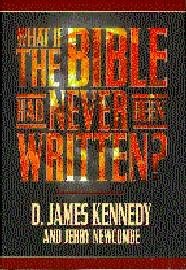
I should have done this review several weeks ago but I kept procrastinating. Soon I will be finished with one of my current books and will have to review that one. OK so a while back I read the book What If The Bible Had Never Been Written? - by D. James Kennedy & Jerry Newcombe.

This book was somewhat enjoyable, and very informative, however, it reads like a boring school text book. It has a large notes section at the end with all the bibliographical information on the sources of the facts. Unfortunately many of the references are other works by the authors especially this books companion book What if Jesus had Never Been Born?. The back of the dustjacket has some reviewer quotes and praises for the book. One of them indicated that when confronted with skeptics comments about The Bible not being true and it doesn't matter you can hit back with this book. Unfortunately skeptics who read this book will not be convinced, and probably will ask even more questions or become more skeptical.

Author James Kennedy is a Presbyterian Minister in Southern Florida and his co-author Jerry Newcombe is a senior producer for Kennedy's televised sermons so it is obviously going to have a Christian point of view slant. I think this will help Christians and those seeking more information on Christianity more than it will answer questions from skeptics. The main focus of the book is how the Bible and Christians have influenced society and in many cases contributed to major historical events and scientific break-throughs. Many of the people discussed I didn't know had been Christian or had been influenced by Christian beliefs and the Bible. It also gives a pretty decent history of Christianity so its not a total waste of time. The writing style is very stale, as I said, it reads like a boring school text book.

One section of note is at the beginning of chapter five which deals with how the Bible has influenced politics. When Jesus tells his disciples "You are the salt of the Earth" Kennedy goes on to explain that salt is a preservative to keep good things from going bad. He says "The followers of Christ have in face proved to be, more than anyone else, the preservatives of decency and morality in the world." Many non-Christians may disagree with that, and try to twist it to say the complete opposite.

Well if I had to rate this book I'd give it only a 2.5. I think it works better as a reference book than as a source of entertainment.

What If The Bible Had Never Been Written? - by D. James Kennedy & Jerry Newcombe 1998 Thomas Nelson Publishers Hardback (288 pages).

Saturday, May 27, 2006

A Recent Read Number 2

"The Grail story is everywhere, but it is hidden."


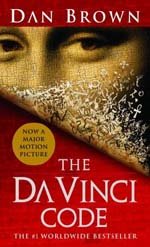
On Wednesday night (24 May, 2006) I finished reading the controversial The Da Vinci Code by Dan Brown. Wow! What a story. OK so many of the historical and religious "facts" this book claims as being accurate, aren't totally accurate. First off this is a work of fiction, it is not intended to be a replacement for the Bible or to be a reliable text book for historical and cultural arts studies. It is a fast paced murder mystery, treasure hunt, police chase novel. I won't give any details of the plot away, but I will say that there are a few surprises toward the end of the book and at the end of the book.

If you read this book, or see the movie that is based on it, you need to remember that it is a work of fiction. Even though the book claims some things as fact, historians and religious experts are tearing those claims apart. I am looking forward to seeing the movie sometime, but probably after it hits the DVD market. I also plan on getting and reading the author's other book Angels & Demons which has the same main character.

The Da Vinci Code by Dan Brown 2003 Anchor Books Mass Market Edition (Paperback version 489 pages.)

Monday, May 22, 2006

Angels In The Clouds!

I'm sure at some point in your life you have looked up in the sky at the clouds and seen one shaped like a bunny or a dog, a horse or maybe like a human face, or some other physical shape. I often have seen familiar shapes in the clouds. Many times I see clouds shaped like horses or like a bearded man's face, or perhaps one entirely shaped like a human. Many times when I see one that looks like a face or a human, I think that it must be an angel looking down on us. An angel looking for someone in distress to save, or perhaps looking a sad child to chear-up. Or they maybe are just trying to say "Hello, God Loves you, you know." On the other end of the spectrum when the clouds are gloomy, gray and so dark they are almost black, it puts a little bit of fear in me. Perhaps those clouds are deamons looking to cause trouble. Often when I see fronts of clean white clouds near the dark clouds of an approaching storm, I imagine a great battle between the Angels and Demons in those clouds.

Either my imagination is getting stronger or the clouds are taking on symbolic shapes more often. More and more I find myself looking to the skies and appreciating whatever forms the clouds happen to be taking at that particular moment.