Showing posts with label Book Review. Show all posts

Thursday, June 30, 2016

Update: Books and Things

Update: Mid February to Very Late June 2016

I have made some progress since my last update. I was trying to catch up to my Goodreads "books read" list. Getting my Read in the Past page matched up to my GR list. I was also trying to keep that page looking OK. I haven't finished matching the lists up so that is part of the satisfaction factor. Actually the lack of satisfaction. After that it will need a few more tweaks before I am fully satisfied with it. Um OK so I stalled on this project.

In the background I was working on a few review kind of posts.

A "recent read" that is actually somewhat recent and I have a review of. A quick review posted on Goodreads shortly after I updated my profile there to reflect finishing that particular book. I probably should post it on this blog as well, but right now I am a bit lazy.

To Heaven and Back by Mary C. Neal:  May 2012 Waterbrook Press 222 pages ***

I don't remember what my main goal was when I first attempted to make this post back in mid-Feb. I let it sit till around April for a while and then tried to work on it in early May but we know hoe that didn't go.

Wow it has been a while since I've updated this post as well. Since that book that was semi-reviewed I have read five other books, but haven't "reviewed" them. I have a ton of books read in the last 3 or 4 years that I sort of want to review but haven't. I don't know if I ever will. OH well.

Editorial Note:
     Good I had this post in the drafting queue. I thought I was going to have to do a quick "State of the Blog" update post. I probably should do one since the year is half over already and I am nowhere near looking like my self appointed post quota will be met for the year for two years in a row now.

Sunday, December 30, 2012

Book Review: Death Drop By Sean Allen


" "He's onto us, Admiral!" Shouted Otto. "No real runner would steal cargo and go off course in the middle of a run - they'd never run again, not to mention the bounty put on their heads by the ringers in Trillis - It's HIM!" Malo grunted his agreement and flexed his fists in anger"
NOTE: This review may contain SPOILERS.

Death Drop by Sean Allen. I got my copy of this book from a giveaway at Goodreads by the author. (almost a year ago now) As it was a giveaway I really wanted to like this book a lot, however, I think it is just OK. I still liked it some just not as much as I was hoping I'd like it. This is the first book in a series called The D-Evolution. I was aware of that when I entered the giveaway, I think the series is planned to be a trilogy. This book sets up the series very well, but I will probably pass on the other books in the series.

First off my big disappointment was with the story synopsis that is on the back of the book (and used at Goodreads for the book's entry) described a character named Desmara, which I thought would be the main character,  but she doesn't appear until a few pages before page 150. She is really just one of an ensemble cast, which I don't mind I just wish my expectations hadn't had been set so high, or that the synopsis had concentrated more on the bigger plot arc of the story. I really enjoyed her as a character and she was one of the few characters I could relate to. She is also the only human of the main characters. Her story which is included in the synopsis is more the "B plot" of the book. The "A plot" is something entirely different, but is the story arc for the entire series.

A second disappointment with this book was at 560 pages it took me a long while to get through it and it was a little difficult to follow. It also dragged for me for the first 100 pages or so waiting for Desmara to make her entrance and to get her into the main plot. In some ways she reminded me of the title character of Aeon Flux (the MTV Liquid Television cartoon series I have yet to watch the movie even though I have the DVD) and a little of Lara Croft. The pace picked up for me about half-way through the book, then dragged a little more but picked back up and then when the end came. I was torn between being excited about what would happen in the next book or two and being disappointed that the book ended with such a cliffhanger to set up the next book. It didn't help that while the book was dragging for me I put it down for over a month before picking it back up.

I also had difficulty picturing all the different characters because they were so non-human, I'm partly a visual person, and their descriptions were a bit confusing. I think if some of them were a little easier to picture I might have liked this a bit more. OK yes there are some character drawings on the website for the book series (http://www.devolutionnovels.com ), but to be honest at the time I didn't think the website would have as much info such as character images on it (it might not have at the time I first checked it out). I also had forgotten there was a website for it until I finished the book. So I had to rely on my own imagination, like readers used to have to do all the time, and many of the characters are completely different from what I had imagined.

The book started off with two characters that are sort of a George and Lenny from "Of Mice and Men" so I thought it would be more of a sci-fi buddy adventure story. I was wrong they are part of an underdog rebellion that is fighting to save the entire universe from a super powerful being (mostly spiritual not physical?) that is hell bent on being the supreme emperor of the universe by destroying, controlling and or enslaving every species and race in the universe, and will most likely succeed. So instead of a buddy story I got an intergalactic revolution story. Cue up the opening theme from Star Wars.

The bulk of the story involves the rebels, who have discovered a drug that makes beings immune to the psychic control of this would be universal emperor/demon, the problem is their resources are decreasing rapidly and their population dying off. Also the wanna-be uber emperor with his psychic powers usually knows about things way before they get anywhere near him, and he has some moles in the system that are trying to stop the flow of this drug for obvious reasons.

Oh and the main plot point with Desmara? She was a smuggler or as the book calls them "runners". Apparently in the universe of this book these runners compete against each other. So the more cargo you haul around and deliver to people the bigger and better your reputation. Desmara was the best in the business, although she hid her identity since she was a human, humans in this universe are thought to have been killed off by the super-uber emperor and thought to be extinct. If her humanness was discovered she would be killed. So her public persona was named "The Ghost" it was also believed that The Ghost was a male his specific species not known due to him not being seen. The fact that the Ghost was really a human female was inconceivable.

For more information on this book and The D-Evolution Series you can visit the website for it: http://www.devolutionnovels.com .

Death Drop by Sean Allen 2011 Vintage Six Media 560 pages. - **

Saturday, December 29, 2012

A Recent Read Number 18

" The Stranger chuckled, "My name is Applegate,but that's of no importance" he said. "What's important right now at the moment is that punk baseball team you've been rooting for all these years." "
NOTE: This review may contain SPOILERS.
Since my transition time between reading a book and finally getting around to reviewing it is super long and getting longer this will be the next to the last "A Recent Read" review. Future book reviews I will just use the book title. To date I've been reviewing the books in the order that I read them, but I need to crank out a super late review for a book I got from a giveaway and it is far from the "next" book in my recently read queue. On to this book's review.

The Year The Yankees Lost The Pennant by Douglas Wallop

The Year The Yankees Lost The Pennant was written in the mid 1950s when the New York Yankees were all but unstoppable and were the Kings of the baseball diamond. It was first published in 1954. The story is the typical "Faustian bargain" of making a deal with the devil. In this case middle-aged Joe Boyd a diehard Washington Senators fan is tired of seeing his beloved Senators in the basement during the pennant race. One summer evening he meets a Mr. Applegate (aka: the Devil) they talk baseball, The Senators. They agree the team needs a super slugger and a great fielder they end up making a deal that will get the Senators into the pennant race. Applegate turns frumpy middle-aged Joe Boyd into young studly Joe Hardy the super player that the Senators need to pull them from the division cellar and put them on top of those "Damn Yankees".

Yes this is the book that inspired the Broadway musical "Damn Yankees".  The musical keeps the basic gist of the story and leaves out a character or two. One of the characters left out of the musical that I enjoyed reading in the book was a pitcher for the Senators who begins to suspect the truth about young Joe Hardy and tries to expose Joe as a fraud of some kind but fails.

The musical also doesn't really tell you that Lola is not just one of Applegate's subordinates for the fun of it. She had also made a deal with him to get a man to truly fall in love with her.

In 1955 when the musical "Damn Yankees" opened on Broadway a special paper flyer/wrapper (with actress Gwen Verdon in a baseball jersey, stockings, high-heels and not much else) like a cigar band was placed on the book's dust jacket. I think these were only produced in May 1955 for the musical's opening (I haven't found any good specific reliable info on this rare gem). Due to the rarity of this advertisement on the dustcover, which in themselves are somewhat of a rarity now, the copies with it on the cover are very expensive. I would love to get a copy of it, but I don't think I ever will due to the price.

Some of the later printings of the book have updated the year the story takes place from 1958 to 1964.


The Year The Yankees Lost The Pennant by Douglas Wallop 1954 W.W. Norton & Company Inc 250 pages. - *****

Sunday, November 27, 2011

Need to catch up on Book Reviews


I have really fallen behind in my book reviewing. I have 13 books that I have read over the last year and a half (closer to almost two years) that I have not written a "recent read" for. I am trying to catch up on that the next two I have the drafts set up with the book cover image and the publication history info I like to include at the end but I don't have the book quote or the actual review written. So technically the next several reviews will not be "a recent read". Maybe I should do away with the "recent" bit and not bother with numbering my reviews... I might do that when it hits #20. I don't want to have juggle with two review lists the other one would be something like "a classic read" or "a not so recent read" but I'm sure I would soon get confused and also confuse anyone who bothers reading my reviews.

So I will probably just have to title the future reviews as whatever the book title is plus "review" and forget about being anal retentive with numbers.

Friday, April 01, 2011

A Recent Read Number 17


"Again Langdon forced himself to consider the implausible. If the Illuminati were still alive, and if they stole the anti-matter, what would be their intention? What would be their target?"


NOTE: This review may contain SPOILERS.

Angels & Demons by Dan Brown.
I'm getting to this review very late. I read this book around December '09 to January '10. After reading it I re-watched the movie adaption of The Da Vinci Code and watched the movie of this book (I will probably point out the differences as I go along). Chronologically this book was written before The Da Vinci Code but the movies were released in reverse order and the Da Vinci Code movie claims that adventure as the main character Robert Langdon's first mystery case. That forced the producers of the movie to act as if this adventure came later.

The mystery begins with the murder of a physicist working with anti-matter experiments at the CERN (Conseil Europeen pour la Recherche Nucleaire AKA: European Organization for Nuclear Research) in Switzerland home of the Large Hadron Collider (LHC). Left by the body is an ambigram (an artistic depiction of a word to make it read the same way from another angle usually upside down) depicting the word Illuminati. The main character Robert Langdon is brought in because he is an expert in symbology. An odd and grisly fact about the murder is one of the scientists eyes was removed. The reason is soon discovered a container holding a piece of anti-matter was stolen from a lab that had a sophisticated retina reading security system. The big problem is the anti-matter has to be contained in a certain way, without this containment it becomes a bomb with a set time to explode, unless it is returned to it's containment system. Only two people had access from the secure lab the murdered scientist and his partner/daughter. Of course Langdon falls in love with Vittoria Vetra.The movie version changes the murder victim to being an assistant of Vittoria The movie also changed some of the other character's personalities around, making one of the characters I didn't like in the book likable in the movie.

The main goal of this adventure is to get back the anti-matter before is explodes In the meantime the Pope has recently passed away and the Vatican is in the process of electing a new Pope. One big problem the main candidates for the Papacy turn up missing. It is made known that the Illuminati are indeed alive and are responsible for the disappearance of the main candidates. Soon they start showing up dead. Langdon now has to not only race against the clock to keep the bomb from exploding but he has to help find the missing cardinals before all of them end up dead.

Like The Da Vinci Code this book digs deep into Catholic traditions and culture. It also gives some very vivid descriptions of areas of Rome and the Vatican. As part of his investigation Langdon has to gain access to the Vatican's Library vaults to research the Illuminati and follow all the clues to finding the cardinals in time. As with the other book it has a nice fast pace to it and was difficult to put down. 

As I said I read this book before seeing the film version I am glad I did because it helped to understand somethings about the movie, but as I said they did make changes to some things. It is always interesting to see a film adaptation of a book you have read. There were a few scenes in the movie that were completely different from what I had envisioned while reading the book. I think a few of them could have been done the way I imagined, but one or two of them couldn't. The ones that I thought could have been done I was a little disappointed with how the movie handled them. Oh Well.

My review of The Da Vinci Code.

Angels & Demons by Dan Brown 2000 (2006) Pocket Books 710 pages. - ****

Sunday, November 29, 2009

A Recent Read Number 16

"Since hanging around with the Crime Scene Cleaners, I have been giving serious thought to the choice of method by which people put an end to their own lives, and what these methods say about them."


NOTE: This review may contain SPOILERS.

Mop Men: Inside The World Of Crime Scene Cleaners by Alan Emmins.
This is a fascinating book. If you have ever wondered who has to clean up after a messy murder or a suicide involving blood splatter then you might want to crack open this book. The author spent a month traveling around and working with a man an his company that for a fee cleans up the blood and what-not from crime scenes and messy suicides.

The author often poses philosophical questions about death, life and his views on it before and after hanging around with the Crime Scene Cleaners company. The owner of the company got the idea for his company after seeing the movie Pulp Fiction (the author mentions the movie a few times in the book). He said he was originally going to go into the mortuary business, but he wanted to do something with his life. He is quite a character, but seems to have his head and heart in the right place. If it weren't for the crime scene cleaners it would be up to the family of suicide victims, and motel cleaning staff to clean up the gory mess. The author mentions a few times that most people wouldn't be able to cope with that responsibility.

At first the book seems to be a sort of behind the scenes look at the business of cleaning up after messy suicides and murders. It soon becomes a cross between that and a mini-autobiography of the author with a little bit of drama tossed in. There are a few areas where the book drags, but maybe it was just that I took a bit of time reading this book.


Mop Men: Inside the World of Crime Scene Cleaners by Alan Emmins 2004 (2008) Thomas Dunne Books (St. Martins Press) 306 pages. - ***.5

Thursday, November 19, 2009

A Recent Read Number 15

"I desperately wanted to talk to a human being, but knew I would never get the chance. You are kept from any form of fellowship, conversation or human interaction. "


NOTE: This review is written about 5 months after I finished reading the book. This is the last of my back-logged book reviews for now. This review CONTAINS SPOILERS.

23 Minutes In Hell - By Bill Wiese. Before I begin this review, this is another near-death experience book written by a Christian author that skeptics will pass off as an oxygen deprived fantasy. There have been a few reviews and website postings that point out some inconsistencies in the telling and then go on to crack jokes about the book and it's author.

In a nutshell the author a Christian preacher came home one night, went to bed and then had an awful experience. He was in his bed and then at "3:00 AM" he was suddenly falling and finds himself landing in a dark prison cell. The cell walls are solid stone, he then becomes aware of nasty evil creatures that then proceed to torture him physically. At some point he manages to escape from them and "explore" other areas of the dark world he has found himself in.

He describes pits of fire, with people burning in them screaming and trying to escape only to fall down or be pushed back be other nasty looking creatures. His descriptions are in line with everything about "Hell" that is in the Bible in fact later chapters go on Ad nauseum about where the Bible mentions hell, the exact wording and how many times it appears.

The first couple of chapters tell of the author's Hellish adventure, which is similar to other books I've read one being My Decent Into Death: A Second Chance At Life by Howard Storm. The descriptions of Hell are pretty much the same, how they got there is where they differ.

I'm not sure what to think about this book, as I had originally heard nothing but the nay-saying skeptical "reviews" of the book. I tend to question the authors knowledge of the timing. How did he know was "3:00 AM" when he first "fell" into Hell? Was he looking at the clock at that exact minute? He was supposedly sleeping before he found himself in Hell. I can understand his knowing it was 3:23 AM when he came back as people usually check the time when they get back home after being someplace else. Seeing the time when you come back gives some sense of comfort.

I will leave it up to people who read the book what to think about it, and wither or not they believe the author really experienced what he has written about. As I said at the beginning skeptics will take this story with a grain of salt and call it a fantasy. Christians may get scared of some of the things in it and try to increase their faith in God and in Jesus.

23 Minutes In Hell by Bill Wiese 2006 Charisma House (A Strang Company) 170 pages - **

Wednesday, November 18, 2009

A Recent Read Number 14

"He's Alive! The dead man started singing with me."


NOTE: The review for this book is being written about 6 months after I had finished reading this book. It does CONTAIN SPOILERS.

90 Minutes In Heaven by Don Piper. This is an interesting "autobiography" about a man who had an out-of-body experience. Skeptics will say that what he experienced was a typical chemical induced mind created fantasy. The author and many Christians believe that he actually experienced the after-life in Heaven.

On the cold rainy evening of January 18, 1989 Don Piper an ordained minsiter was returning home from a Baptist Church conference. He didn't make it home. He was in an accident on a small bridge with a very large truck. When the paramedics arrived on the scene, they found no pulse on his mangled body, he was pronounced dead at the scene.

A fellow Baptist preacher came upon the scene. He was told by God to pray for this man, even though he was told, and knew that he was dead. It turns out that he knew the man he was praying for, although he didn't know it at the time as the body was covered with a tarp and he didn't lift up the tarp. He was there to pray for this man, even though the emergency workers at the scene told him the man was dead and nothing could be done.

State law said that he had to be officially pronounced dead before the body could be removed from the scene. While they were waiting for someone who could make that official pronouncement a preacher was praying over the body. He only knew that he had to pray for the dead man and to pray that there were no internal injuries. He then began to sing. He sang a hymn called "What A Friend We Have In Jesus", the man who "was dead" then sang along. The preacher alerted the emergency workers on the scene. The authors very long road to recovery then began. He would never be completely back to normal but he has gone a long way.

The first three or four chapters describe the accident and the authors experience of Heaven in great detail. The other chapters then describe his pain, and the progress of getting back to his life. As he tells of his recovery he also tells of the tests of his faith in God and his desire to return to the Heaven that he caught a glimpse of.

Skeptics of these types of experiences will say that he didn't see or experience Heaven. It was all just chemical reactions. Christians may believe this fascinating story of one man's trip to Heaven and the Hell of pain he has endured to tell others his tale.

Unlike typical near-death experiences the author didn't travel down a dark tunnel to a light. From the moment of the accident, he was enveloped by an intense light and then was in Heaven. His vision of heaven was being surrounded by immense love and people he had loved in his life who had gone on before him. Family, friends they were all there and they were all happy. Music was all around being sung and also being experienced. The only thing missing is an image of Jesus and angels floating on clouds playing golden harps.

I am not going to try to determine if what the author experienced was real or not. I'm not going to say it was all just a well meaning fantasy. I think that each person that reads the book needs to decide that for themselves. I feel that for books like this one Christians will probably have their faith in God reinforced, and skeptics if they choose to read it will pass it off as a fantasy produced by an oxygen deprived hallucination.

90 Minutes In Heaven by Don Piper 2004 Revell (Baker Publishing Group) 207 pages - ***

Friday, November 13, 2009

A Recent Read Number 13

"First of all, I told myself, I must get rid of the persistent sensation that none of this is really happening"

Note: This is a book that I read a few months ago, and some of the details are a little fuzzy at the time I write this review. Big sigh.

WARNING THIS REVIEW CONTAINS SPOILERS!

Charisma by Micheal G. Coney. "Reality what a concept" is the title of a Robin Williams comedy album, but it is also something that is vital to alternate reality science fiction. This story is a combination alternate reality, multiple Earths story and a plain old fashioned murder mystery with a small seaport town setting. The main character of the story John Maine, I forget what his primary job was, except that he was a hired hand at a Hotel of a boating club, and had a side job of being in charge of the Hotel Owner's boat fleet (If I remember correctly). He falls in love with a girl named Susanna.

Plot number 2, or is it plot 5? Boy, well man in this, meets girl falls in love with girl loses girl finds girl again, maybe loses girl again, but finds her by the end standard plot. There is a science fiction twist though. The girl in this case is involved with a scientific organization that is conducting experiments that lead to the discovery of parallel worlds.

Our hero, or rather the primary character meets a beautful girl who he eventually learns is named Susanna and she works at a research station that has a few secrets. The main secret is that they have discovered a means to travel to parallel Earths, what they eventually learn is that the timelines of these Earths are converging and will possibly destroy them all. John Maine falls in love with Susanne, the catch is that she is really from one of these parallel Earths, and the Susanne from John's primary Earth is dead. He soon learns that many people he has been in contact with are dead, and even he is dead on one and possibly more of these Earths.

John's love for Susanne drives him deeper into exploring these parallel Earths, and also the fact that on his primary Earth he is a suspect in the murder of a respected man in the seaport town the story takes place in. Long story short he is not actually the murderer, however due to his mucking about in all these alternate worlds, and the fact that these worlds are converging, he is constantly incriminating himself.

By stories end the loose ends are tied up, and some of the events that John experienced didn't happen, a few of them canceled themselves out. The story doesn't have a typical feel of science fiction other than the traveling between the parallel worlds. If feels more like a romance story set in a seaport town, that makes me think of Maine, or maybe it is the character's name that makes me think of that area.

I stumbled across this book quite by accident really. I had actually ordered another book by the same author from an Ebay seller, and the seller accidentally sent this one. I was intrigued by the synopsis of this book and rather than send it back, I decided to keep it. The seller only charged me the cost of the book not the extra postage, and sent the book I originally ordered. The book I had ordered was actually a book I had read before, but wanted a better, cleaner copy of. That book was Cat Karina a book writen by the same author a few year latter than Charisma. Some day I should reread Cat Karina, or at least try to drum up a review of it.

Cat Karina


Charisma by Michael G. Coney 1975 Dell Publishing Co., Inc. 250 pages - ***.5

Sunday, November 08, 2009

A Recent Read Number 12

"Herein you will find truth and fantasy. Each is necessary for the other to exist, but each must be recognized for what it is."


Note: This is the second of five of my recent book reviews of books I read earlier this year, and never got around to writing up my reviews. So I may have missed some details that at the time of reading these books I may have had.

The Satanic Bible - By Anton Szandor LaVey. It took me a long time before I had the nerve to read this book. When I first heard about it I was scared to read it. I'm not sure why, maybe because I had that paranoid Christian viewpoint that it was somehow cursed and would warp your mind, or some other such nonsense. I think there are some Christians who do believe that the book is evil and should be destroyed. It may also have been from all those stories you hear about teenagers committing suicide because they read this book, or got into Satan worship.

Well this book is basically just one mans philosophy that has been shaped by childhood clashes with organized religion. He grew up a "circus kid" and at 18 left the circus to join a carnival. His early introductions to Religion were from watching so called Christians who would spend Saturday night watching half-naked girls dancing at the carnival and then the Next Sunday morning those same men would be in the church pew with their wives and children. Needless to say this, and the pomp and circumstance of Religious ceremonies turned LaVey off of religion particularly Christianity.

In a nutshell LaVey's Satanism is part anti-Christianity and part self preservation. Throughout the book the theme is do whatever you want, try not to harm others, but if they harm you or prevent you from doing what you want then harm them.

The first half of the book is this basic philosophy and the description of what LaVey's Satanism is. I think most of his Hail Satan! stuff is just to annoy Christians. I think that the attitude that many atheists have of Christians being intellectually inferior to free-thinking atheists comes partly from them reading this book.

Often he mentions that Christianity doesn't let you have any fun, particularly when it comes to sex, but his Satanism says Go FOR IT! So long as you don't abuse or harm the other person (unless they want you to). He claims that Christianity keeps people from being themselves and enjoying the material world.

The second part of this book I think is total nonsense, and is extremely difficult to comprehend. Maybe it is because it has some of the "Satanic Rituals" which LaVey calls "Enochain Keys" (whatever they are, that part went right over my head and I forget how they were explained). This final part is difficult to read partly because the "Keys" are first written in Latin and then the following page written with the English translation. Many of them are lyrical but are very cryptic. They are supposed to be read by a Satanic priest during their Black Mass. Some of them are to be done to curse people, but it seems that most of them are just to satisfy the Satanists need to Sieg Heil er HAIL SATAN!

I don't think Christians, or people of non-Satanist religions should fear reading this book. Mr. LaVey's Satanism is not the Evil Human sacrifice Satanism that is depicted in Hollywood movies, and condemned by Christianity and particularly the Catholic Church. His Satanism to me is a slightly twisted "everyone fend for themselves and forget everyone else" philosophy. Don't hurt people unless they hurt you first. I don't even think his concept of Satan is the same as that of Christianity, although he does seem to exploit that way of thinking. Except for the final sections about the Ceremonies this book as I said is basically about a "look out for number one" way of life.


The Satanic Bible by Anton Szandor LaVey 1969 Avon Books (Harper Collins Publishers) 272 pages - **.5

Tuesday, November 03, 2009

A Recent Read Number 11

"For the record, I should state what is hopefully obvious by now. If you asked me the question 'Are you trying to use science to prove the existence of God?' my response would be, 'Absolutely not. What I am attempting to do is to use the scientific method in an open-minded manner to enable God - if he/she/it/they exist - to prove his existence himself.'"


The G.O.D. Experiments: How Science Is Discovering God In Everything, Including Us by Gary E. Schwartz with William L. Simon. Wow what an interesting angle to an age old debate. First off this is not a pro-Christian book attempting to Bible thump at skeptics and atheists the Gospel of Jesus. This is an open-minded exorcise that leaves the question of "Is there a God, or Not" still pretty wide open. The author at the time of publishing was a professor of psychology, surgery, medicine, neurology, and psychiatry the University of Arizona. He approaches the age old question of "Does God exist?" from a skeptical scientists view. Rather than quote the Bible at every opportunity and say "It's in the Bible, so there!", he conducts psychological experiments to try to show that there is some sort of force or energy that influences the universe. He uses a rather clever term "Guiding, Organizing, Designing" Process (G.O.D.) rather than God.

Even though this book tends to read like a college text book, it does have some pretty interesting events and results. One thing that I think readers will come away with from reading this book is that the universe is not just made up of random cause and effect events. There is some sort of force that at least started some organization in the universe. The author doesn't attempt to claim that the G.O.D. process he describes is the Abrahamic God of the Bible, or that God even still influences people and events in the universe. He leaves all that up to the reader to make his/her own conclusions.

It has been several months since I last read this book to when I am writing this, so my initial thoughts I had while reading the book have been lost to time. Just as the author lets his readers draw their own conclusions about the existence of God or of Intelligent Design of the Universe I will let readers of this review draw their own conclusions about whether or not they wish to read this book.

I do recall that when I heard about this book and saw a description of this book, I had some questions that I thought this book would answer. Well those questions were not answered. The book does follow a similar train of thought that I have had for several years concerning the nature of God. Most peoples views about God don't fit that thought. People who are looking for some kind of physical or human trait God will be disappointed. This book tends to follow the belief that what we tend to call God is actually some sort of force or energy that has some influence on the universe in ways that we don't really look at.

The G.O.D. Experiments: How Science Is Discovering God In Everything, Including Us. by Gary E. Schwartz 2006 Atria Books (Simon & Schuster, Inc.) 305 pages - ***

Thursday, April 10, 2008

A Recent Read Number 10

"Just because it's not ours doesn't mean it it's the wrong one! We could be from the 'wrong reality'!"

**WARNING THIS REVIEW CONTAINS SPOILERS!**

Doctor Who: Reckless Engineering by Nick Walters Wow another mind-boggling Doctor Who story. This Doctor Who story takes place during the Eighth Doctor's Incarnation. The Doctor is traveling with his novel only companions Fitz and Anji. I'm not sure which story they started with, but since they are from different times, Fitz from the 1960s and Anji from the 1990s or early 2000s they joined at separate times. Any who in this story the Doctor and his companions find themselves dealing with an alternate reality. It is 2003 to them, but in this reality a temporal disturbance called "The Cleansing" occurred in 1843 and to the people in this reality it is the year 160. The industrial revolution never happened in this reality of year 160 and it is against the law to speak of the The Cleansing. Nobody knows what caused the Cleansing, many think it was an act of God so they don't question it. The truth of the matter is that under the influence of an alien from the distant future a young engineer creates a machine called the Utopian Engine he is told will save the alien's race from dying by bringing them back to the past and in return they will help man with all sorts of technical and medical advancements. Well of course it was a lie (in part) true the alien race was dying, but they didn't care about mankind at all typical. The Utopian machine was flawed and instead of bringing the aliens back, it created a temporal jump of forty years to occur within a minute. Children suddenly found themselves in grown up bodies with long hair and fingernails and all the adults and animals were suddenly rotting corpses. The Doctor is faced with trying to figure out what this Cleansing thing is, which he doesn't like from the very beginning, and then finding a way to corrected the damage it has done. The problem is more complicated than it appears and it appears to be impossible to solve.

I'm not a huge fan of Doc number eight so this story dragged for me in some areas. Also the companions Anji and Fitz get boring fast. Fitz is a typical cocky fight first companion who tends to act without thinking things through first, and Anji (who I think is of middle eastern origins from India I think) has to deal with racism and sexism. Even though these characters have appeared in many other Doctor Who books, I think it is only the second one that I have read with them in it. I should try to track down the books where they first appear to get a better grasp of who these characters are. In the meantime I find them sort of dull. By the way this particular book I didn't initially pick up by choice, it was packaged with an issue of a Doctor Who magazine as a "Freebie" but with the price of the magazine and the added cost of it being an import from the UK I don't really think I got much of a bargain with the combo.

Doctor Who: Reckless Engineering by Nick Walters 2003 BBC Worldwide LTD 270 pages - ***

A Recent Read Number 9

"When I woke up that morning, it didn't take me long to realize there were dogs in my nose."


Cruel Shoes by Steve Martin. Before becoming a big box office movie star Steve Martin rose to the top of the stand-up comic ranks. He was a frequent guest host for the original cast Saturday Night Live, often he would be the first host of a new season, which is why some people mistakenly think he was the first to ever host SNL. That honor my friends goes to George Carlin. Anyway it was during this time (late 1970s) that Steve wrote this book, which is just a hodge podge collection of strange, weird and often funny stories and ideas. Some of them are quick one-liners while others run a page or two very few are more than two pages long. Some of the bits, all of which have titles and are listed under the table of contents, get to the point of the joke right away, while some take sometime and make you scratch your head and wonder what the point is. Then there are the totally absurd bits like "How To Fold Soup".

It is a quick and easy read as there are only 120 some pages with many of those having black and white photos from Steve on stage doing his stand up. The humor ranges from slightly humorous and only worth a slight smile to outrageously hilarious. I took about a week to read this as I would read one or two bits and then put it down, but it can be read in a very short period of time depending on your reading speed and length of laugh breaks. Fun and very silly book.

Cruel Shoes by Steve Martin 1977 G.P. Putnam's Sons 128 pages - ****.5

Monday, May 14, 2007

A Recent Read Number 8


"Judy wants me to read The Bible. Okay. That's what I'll do, and when I read it I'll be able to prove to her that she is absolutely wrong."


Betrayed! by Stan Telchin. A very simple book to read, and very touching. Betrayed is an autobiographical story of a Jewish father's initial reaction to and eventual acceptance of his daughter's life changing decision to become a believer in Jesus Christ. First the author and his wife as traditional Jews, are shocked and angry about their daughter's decision to accept Jesus as her personal lord and savior. Then he reads a bible with the intention of proving her beliefs to be wrong and to win her back. Along the way he discovers that the more he tries to disprove The Bible the more he learns to accept it as The Gospel Truth.

I got a kick out of the fact that the author lives in the DC area. His ministries website (telchin.com) mentions a second book (Abandoned) that I think is sort of an update to Betrayed or perhaps the story of his ministry work.

Betrayed! by Stan Telchin 1981 Chosen Books (Baker Book House Company) 139 Pages. - ***

A Recent Read Number 7


"Either The Massiah came almost two thousand years ago, or the biblical prophets were false prophets - in which case we can throw The Bible out and go join some other religion (or abandon religion completely)."


Answering Jewish Objections To Jesus - Volume One - (General and Historical Objections) Michael L. Brown. This book was intended by the author to be read primarily by a Jewish audience and then secondly by Christians to further understand somewhat were Jews are coming from historically. The book has a basic format of common questions (or objections) that Jews have about Jesus and Christianity, followed by an answer and then often lengthy endnotes as an explanation. It is interesting that many Jews haven't even bothered to find out anything about Jesus. They normally just dismiss anything about him and don't bother with reading any of the New Testament. The author of this book is a massianic Jew, that is someone whe was born into a Jewish family and has accepted Jesus as his savior and believes he is The Massiah. Often they call themselves True Christians, many traditional Jews consider them traitors and believers of a cult or of an enemy religion.

I found this book to be a difficult read, since I am unfamiliar with many of the references to Jewish Scriptures that many Jews wouldn't even bat an eye at since it (the original Hebrew scriptures often not found in the Christian Bible) was something they already know and are very comfortable with. I was dissappointed when I realized that this book was only the first of a three volume set, and many of the objections that I have heard about (and wanted to hear the answer to) are supposedly in either volume two or more likely in volume three. There is a 3-in-1 Volume available now I think, with updates, and I fear there is also a volume 4 now. I believe that many Jewish readers will still be asking the same questions and will not be satisfied with the answers the author gives.

Answering Jewish Objections to Jesus - Volume One by Michael L. Brown 2000 Baker Books 270 Pages - **.5

Wednesday, October 11, 2006

A Recent Read Number 6

"Christianity from its very beginning was a literary religion, with books of all kinds playing a central role in the life and faith of the burgeoning Christian communities around the Mediterranean. How, then, was this Christian literature placed in circulation and distributed? The answer, of course, is that for a book to be distributed broadly, it had to be copied"


My latest read "Misquoting Jesus" by Bart D. Ehrman is a very interesting read. The main focus of this book is the New Testament of the Christian Holy Bible and its variations. Ehrman explains, often at length the process of copying the text of the Bible's New Testament from the first century Christians copying the scriptures by hand, to the Monks and scribes of the Middle Ages (still copying painstakingly by hand) to the early printing presses to modern mass publishing. He talks a lot about the scholarship field of textual critisim which is "the science of restoring the original words of a text from manuscripts that have altered them." The problem we have with The New Testament that we read today, is not only translation errors, but changes of the text in the "original" language by the scribes who copied the text. Changes to the text sometimes were just innocent mistakes, mispelling, letter or word switching. There were also intentional changes made. Some of these intentional changes were to correct previous errors made, but some of the changes were to clarify or support church views or theological ideas or views. Several examples of changes are described some of the examples were to support the divine nature of Jesus. This book explores only a sampling of the changes, if it were to list all of the changes it would be a series of books, since there are literally thousands of variations. Simple variations, complex variations both intentional and unintentional have been found since the original texts were first written.

One must question if the Bible is inspired by God then why all the changes? In his conclusion chapter the author writes "..even if God inspired the original words, we don't have the Original words" This opens up holes that atheists have jumped into for centuries. The author asks if God had inspired the words, then why didn't he preserve them? Who knows. My theory on this is along the lines of movies based on books. The movies make changes to the details of the text but they keep the story intact (usually). A second movie made many years later will often make more changes to the details but still keeps the basic story. The same thing has been done with the Bible, an original spelling error, or word switch in the text of an early copy has been copied many many times, but somewhere down the line some scholar or textual critic noticed the change, while comparing two versions. Once the change has been found, how significant is it? Does it matter how many women went to the tomb to prepare the body of Jesus for burial? What about the last words that Jesus said upon the cross?

Shortly after I started reading this book I noticed that another book was out there that points out some mistakes that are in this book.I guess I'll have to track that book down sometime and read it. The fact that this book may have some inaccurate information doesn't change the fact that what we read today is not the same exact wording as what the original author wrote. Does this mean the Bible is not inspired by God? Not necessarily, inspired doesn't mean dictated word for word as many people think it is. If the words of the New Testament are not the true words of God does that make them any less important?

Even though this book is subtitled "The Story Behind Who Changed the Bible and Why" it doesn't really explain the Why completely. I don't think that can ever be known. We can discover how the text was changed, and narrow it down to when and generally speaking who, but for those changes that were intentional I don't think we will ever know why.

Misquoting Jesus - The Story Behind Who Changed The Bible and Why by Bart D. Ehrman 2005 Harper Collins Publishers 242 pages.

Saturday, September 30, 2006

A Recent Read Number 5

"Had Jesus never come and the New Testament never written, the vast majority of humankind would know nothing of The Old Testament. It would just be the sacred writings of a wandering and obscure nation. Instead, because of Christianity, both the Old and New Testaments, with their higher codes of morality, have now gone out into all the world!"


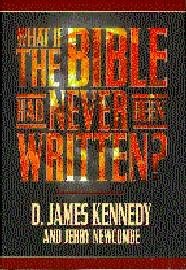
I should have done this review several weeks ago but I kept procrastinating. Soon I will be finished with one of my current books and will have to review that one. OK so a while back I read the book What If The Bible Had Never Been Written? - by D. James Kennedy & Jerry Newcombe.

This book was somewhat enjoyable, and very informative, however, it reads like a boring school text book. It has a large notes section at the end with all the bibliographical information on the sources of the facts. Unfortunately many of the references are other works by the authors especially this books companion book What if Jesus had Never Been Born?. The back of the dustjacket has some reviewer quotes and praises for the book. One of them indicated that when confronted with skeptics comments about The Bible not being true and it doesn't matter you can hit back with this book. Unfortunately skeptics who read this book will not be convinced, and probably will ask even more questions or become more skeptical.

Author James Kennedy is a Presbyterian Minister in Southern Florida and his co-author Jerry Newcombe is a senior producer for Kennedy's televised sermons so it is obviously going to have a Christian point of view slant. I think this will help Christians and those seeking more information on Christianity more than it will answer questions from skeptics. The main focus of the book is how the Bible and Christians have influenced society and in many cases contributed to major historical events and scientific break-throughs. Many of the people discussed I didn't know had been Christian or had been influenced by Christian beliefs and the Bible. It also gives a pretty decent history of Christianity so its not a total waste of time. The writing style is very stale, as I said, it reads like a boring school text book.

One section of note is at the beginning of chapter five which deals with how the Bible has influenced politics. When Jesus tells his disciples "You are the salt of the Earth" Kennedy goes on to explain that salt is a preservative to keep good things from going bad. He says "The followers of Christ have in face proved to be, more than anyone else, the preservatives of decency and morality in the world." Many non-Christians may disagree with that, and try to twist it to say the complete opposite.

Well if I had to rate this book I'd give it only a 2.5. I think it works better as a reference book than as a source of entertainment.

What If The Bible Had Never Been Written? - by D. James Kennedy & Jerry Newcombe 1998 Thomas Nelson Publishers Hardback (288 pages).

Sunday, June 11, 2006

A Recent Read Number 4

It's that time again for a review of the book I have just finished reading, or something. This time I've been reading an old Pulp Fiction Sci-Fi Two-In-One news-stand book published in 1963. This book has two full stories, fortunately by the same author (sometimes the stories are two separate authors with no connection what-so-ever). The Author is John Brunner the titles "The Space-Time Juggler" and "The Astronauts Must Not Land". The book is designed so that instead of reading it cover-to-cover you read it cover-to-middle, then flip the book over and read it cover-to-middle. The more I think about it the more I vaguely remember a news-stand near me when I was a kid having this type of paperback book, in addition to having magazines, and the comics, trading cards and candy I used to go there for. Back in the days of real penny bubble gum and five and ten cent candy bars. In more recent years I've seen this type of book in used book stores.


"...'tis reported, they say, that there is a man whom no bars will hold, who comes and goes where he will, and who has strange powers that surpass the human."
~
from The Space-Time Juggler


The first story of this two-in-one "The Space-Time Juggler" feels more like a fantasy piece than proper sci-fi. The main story line is medieval in nature, except that the empire is made up of six planets, and they mention spacecraft and helicopters. I'm really disappointed with this story. It doesn't get to feeling like a sci-fi story until near the end when it reads more like an acid-trip of some kind. Then the true nature of the character named Kaleb The Conjurer is revealed, sort of. Through out the story he acts like an eccentric magician, con man. He of course is the title character The Space-Time Juggler. I had started reading this a couple of years back when I had gotten the book from off of Ebay, but never got into enough to finish it. I almost should have left it unread. I didn't gain anything from reading it, yet this was the story I had bought the thing for in the first place. It did not live up to what I was expecting.

"I got the recorder out of my pocket, turned the master switch from voice to vision recording, and began to scan. My hand was shaking so badly I wasn't sure it was worth the trouble..."
~
From The Astronauts Must Not Land.

Now the second story "The Astronauts Must Not Land" was much better. If I didn't know any better I could swear it was a story used for The Twilight Zone or The Outer Limits, but I don't think it ever was. For a story written in the early 1960s and set in the 21st Century, (I'm not sure how far into it) it has a lot of modern references. Until I had done a little internet research I thought Fax machines were something that was developed in the 1970s (I recall a Star Trek Comic book from 1976 making a reference to fax machines), but the technology for it goes back to the late 1800s, the first fax copies (text) were sent in the early 1900s via telegraph wire, the first telephone line faxes were sent sometime during the 60s. But I digress. The story is written in the first person by the character of David Drummond a science writer, reporter and big brother to one of the sixty astronauts aboard a spaceship called the Starventure, a ship designed to travel to Alpha Centauri via hyperspace. Well things don't go as planned for the crew as their bodies are changed by some aliens in hyperspace during their trip. What diabolical plan did these aliens have for doing this? And why are these aliens appearing as gigantic monsters in the sky? I don't want to spoil these questions for anybody wanting to read this story. I will say this though this story is a highly scientific sci-fi story much of the science talk went over my head. I normally don't like the super scientific terminology stories but this one was pretty fun, but slightly difficult (as far as the science lingo) to read. In my internet adventures in tracking down info on this story, thinking it might have been used as the basis for an Outer Limits type television show or movie, I found out that an updated re-write of it had been done some ten to twenty years later. It would make a good movie.

The Space-Time Juggler/The Astronauts Must Not Land by John Brunner 1963 Ace Books, Inc. (84/138 pages)

Wednesday, May 31, 2006

A Recent Read Number 3

"Mullen scratched his head. 'But There isn't a police box by -'
The Doctor shushed him. 'Trust me, Inspector.'
He looked at them both, steely-eyed. 'Now, when I say run, run.'"


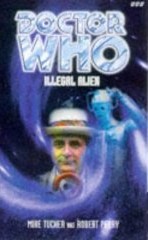
Just this afternoon (Wednesday 31 May, 2006) I finished my re-read of this Doctor Who Series book "Illegal Alien" . Even though I don't normally like stories set in WWII England this has the bonus feature of being Sci-Fi with The Doctor and Ace, a couple of strange characters and an old enemy The Cybermen. A wonderful read. I enjoyed it much better this time reading it than I did when I first read it six? Years ago? I wasn't sure if I had read it before, so I started to read it and sure enough by the second page I realized I had read it before. In typical 7th Doctor fashion, the Doctor is mysterious and seems to not only be playing games (Particularly Chess) but also one step ahead of everyone else. Except he isn't one step ahead of his enemies. In typical Ace fashion she runs off in excitement over something and gets caught up in some tangled web that requires help from the Doctor. Oh did I mention The Cybermen are in this one? I don't normally like the Cybermen stories but this one is pretty darn good.

"Illegal Alien" by Mike Tucker and Robert Perry 1997 BBC Books (279 pages)

Saturday, May 27, 2006

A Recent Read Number 2

"The Grail story is everywhere, but it is hidden."


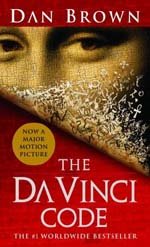
On Wednesday night (24 May, 2006) I finished reading the controversial The Da Vinci Code by Dan Brown. Wow! What a story. OK so many of the historical and religious "facts" this book claims as being accurate, aren't totally accurate. First off this is a work of fiction, it is not intended to be a replacement for the Bible or to be a reliable text book for historical and cultural arts studies. It is a fast paced murder mystery, treasure hunt, police chase novel. I won't give any details of the plot away, but I will say that there are a few surprises toward the end of the book and at the end of the book.

If you read this book, or see the movie that is based on it, you need to remember that it is a work of fiction. Even though the book claims some things as fact, historians and religious experts are tearing those claims apart. I am looking forward to seeing the movie sometime, but probably after it hits the DVD market. I also plan on getting and reading the author's other book Angels & Demons which has the same main character.

The Da Vinci Code by Dan Brown 2003 Anchor Books Mass Market Edition (Paperback version 489 pages.)